Every villa listing looks perfect online. The same infinity pool, the same sun-drenched terrace, the same caption promising “breathtaking views.” Yet travelers who have booked a disappointing villa know the gap between photos and reality can be painful, and expensive. The trick is learning how to choose a villa with a clear method instead of falling for the prettiest thumbnail.
This guide walks you through the whole decision, step by step. We start with your group size and travel style, then set a realistic budget, pick the right location and setting, and match amenities to how you actually plan to spend your days. From there, we cover booking timing, how to vet listings and reviews before you pay, and a short checklist to sort your final shortlist. Follow it in order, and you will book with far more confidence.
Start With Your Group Size and Travel Style
The biggest villa booking mistakes start before you even look at listings. Get your group right first, and everything else falls into place. Count heads honestly, then think about who needs what kind of bed. Couples almost always want king beds, while families with children often prefer twin beds or bunk options, so a “three-bedroom” villa that sleeps eight on sofa beds may not suit your group at all. Ask the host for the exact bed configuration in each room, not just the total sleeping capacity.
Privacy or hosted stay?
Next, decide how much company you want. Some villas are completely private, with no owner on site and no neighbors in sight. Others sit on shared grounds with a pool used by other guests, or come with a live-in host who prepares breakfast and gives local tips. Both can be wonderful, but only if you chose that style on purpose. Read the listing carefully and ask directly whether the owner lives on the property.
Money matters here too. Villas sleeping 6-8 people often cost less per person than booking 3-4 hotel rooms, especially once you add up hotel breakfasts and dinners. Finally, check accessibility needs early. Single-level layouts and step-free entrances are rare in older villas, and a charming hillside property with stone stairs can be a real problem for anyone with limited mobility. Confirm the layout before you book, not after you arrive.
Set a Realistic Villa Budget
Villa pricing is more transparent than it first appears, but you need to look past the nightly rate. As a comfortable rule of thumb, plan around $150-500 per night for a mid-range 3-bedroom villa in Europe, depending on the country, region and season. That headline number, however, is only the starting point of your real budget.
Timing changes everything. Peak-season rates typically run 30-60% higher than shoulder-season prices in May or late September, so the same villa can cost dramatically more in July than in June. If your dates are flexible, shifting your trip by a few weeks is often the single biggest saving available. For more ways to keep costs down, our guide to budget villas in Europe covers cheaper regions and booking tactics in detail.
One more habit worth adopting: split costs per person rather than per night. A $600-per-night villa for eight people works out to $75 each, which may beat three hotel rooms at $120 each. Comparing per-person costs is the only fair way to measure a villa against hotels.
- Pool heating: heated pools cost extra in most villas, typically $30-80 per day if offered, so add this if you are traveling outside the warmest months.
- Cleaning fees: many owners charge a separate end-of-stay cleaning fee, which stings more on short trips than long ones.
- Security deposits: expect a refundable deposit, sometimes several hundred dollars, held on your card until after check-out.
Choose the Right Location and Setting
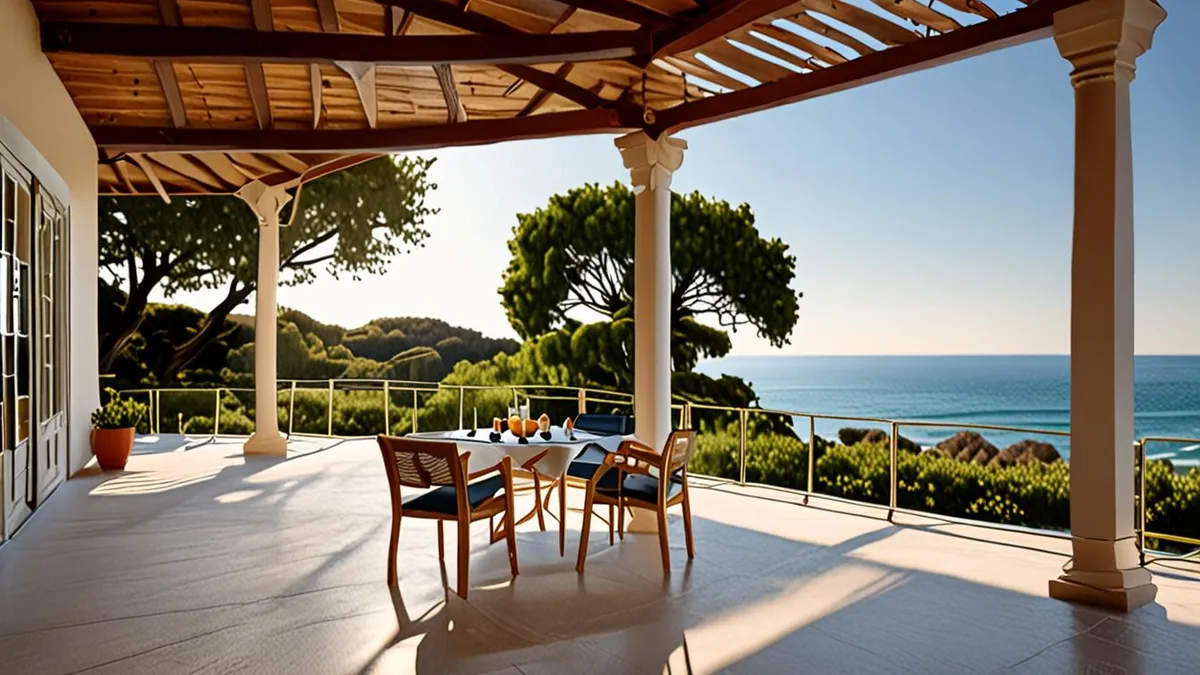
A villa is more than a building, it is a base camp, and the setting shapes how your days unfold. Coastal villas put the beach at the center of everything, mountain villas suit hikers and cooler evenings, lakefront properties offer swimming and paddling on your doorstep, and city-edge villas give you space with quick access to restaurants and sights. Choose the location that matches your itinerary, not the one that photographs best in the brochure.
Check the practicalities before the views
That cliff-top villa with the panoramic terrace may be a long drive from the nearest supermarket, which gets old by day three. Before booking, verify that the nearest town, beach or supermarket is within 10-20 minutes by car. Ask the host to name the closest village and estimate driving times, then check them yourself on a map.
Road access deserves its own check. Steep gravel driveways and narrow village lanes can complicate larger rental cars, and some rural properties are genuinely awkward to reach. If you plan to rent a big SUV or minivan for your group, confirm the access road and parking situation with the host first.
Finally, match the setting to the season. Beach villas shine in summer, when sea breezes keep them comfortable and coastal towns are lively. Mountain villas suit spring and autumn hiking, when trails are at their best and crowds are thinner. A beach villa booked for a hiking trip, or a mountain villa in a quiet winter season, rarely delivers the holiday you imagined.
Match Amenities to Your Holiday Plans
The right amenities can make or break a villa holiday, so start with the one feature that defines most villa stays: the private pool. If your plan is to linger at home most days rather than drive out, put the pool at the top of your list and treat everything else as secondary. Just remember that a pool photo tells you nothing about whether you can actually swim in it during your dates.
Kitchens vary enormously. Some villas have a proper oven, a dishwasher and a covered terrace where ten people can eat comfortably; others offer a two-burner hotplate and a wobbly table indoors. If your group plans to cook in most evenings, interrogate the listing before you book. Families with kids should also look at how the outdoor space is laid out, and our guide to family-friendly villas across Europe covers this in more detail.
Before you commit, work through this checklist:
- Pool season and heating: many pools are only open from late spring to early autumn, and heating the water almost always costs extra if it is offered at all. Ask directly whether the pool will be warm during your specific week, and get the daily heating cost in writing before you pay.
- Kitchen equipment: confirm there is a full-size oven and a dishwasher if you cook in, plus outdoor dining space with enough chairs for your whole group. Ask for photos of the inside of cupboards if the listing is vague.
- Air conditioning: in southern Europe from June to August it is essential, yet not standard in every villa. Check which rooms have it and whether it is included in the rate or billed separately by usage, since metered cooling can add up quickly over a hot week.
- Wi-Fi speed: if anyone works remotely, ask the host for a recent speed test screenshot rather than trusting the word “fast” in the description. A villa with thick stone walls may also have weak signal in bedrooms, so ask about coverage room by room.
Finally, think about the small comforts that shape long stays: decent mattresses, blackout blinds, laundry facilities and enough sun loungers for everyone. None of these appear in headline photos, but they decide whether a two-week trip feels relaxed or cramped. Ask about them early, and note which answers matter most to your group before you shortlist.
Time Your Booking Right
Villa availability works differently from hotel availability, and this catches many first-time renters off guard. Hotels have hundreds of rooms, so a late booking usually still gets you a bed. Villas do not: the best properties in any region hold a fraction of the inventory, often just a handful of homes per town, and they disappear long before the rest. Last-minute villa hunting in summer is usually a compromise rather than a bargain, which is why your booking window matters as much as your budget.
- Book 6-9 months ahead for June-August stays. The top-rated villas sell out first, often to returning guests who rebook before listings go public, so early booking is what gets you the pool-facing master bedroom rather than what is left over.
- Use 2-3 months of lead time for shoulder-season trips. For May or late September, demand is softer, prices sit well below peak-season rates, and you can often afford a larger or better-located villa than your budget would buy in August.
- Plan around minimum stays. A 5-7 night minimum is standard for weekly summer rentals, so a long weekend may not be possible at the villa you want. Fix your dates before you search, because changeover days also limit which arrival dates are even accepted.
- Read the cancellation policy line by line. Flexible rates usually cost 10-15% more than non-refundable ones, which is a reasonable insurance premium if your group’s plans might still change.
One practical tip: once you have chosen your dates, set a calendar reminder for the booking window rather than browsing casually. Serious groups shortlist two or three villas, agree on a favorite, pick their dates in an evening and pay the deposit the same week. That decisiveness is usually what separates the groups who get their first choice from the ones settling for whatever is still available in July.
Vet Listings and Reviews Before You Pay
Listings are marketing documents, and photos in particular are chosen to flatter. The first thing to do is cross-check the photos against the map location: a “beachfront” villa that sits 400 meters uphill from the coast, or a “walking distance to town” claim that turns out to be a hot 25-minute climb, will show up quickly once you look at satellite view. Then scan the reviews, prioritizing recent ones that mention cleanliness and accuracy, because those two themes predict whether the villa matches its photos better than any star rating does.
Ask the host the awkward questions
Before paying, message the host with specific questions rather than general pleasantries. Ask how often the pool is cleaned and serviced, what the check-in process looks like if you arrive late, and whether neighbors have dogs, roosters or regular parties. Vague or evasive answers are themselves useful information. A good host replies within a day with concrete details; a slow or defensive reply before you have paid rarely improves afterward.
Know who actually handles problems
Also confirm who manages the property locally. A responsive local manager can fix a broken air conditioner or a lost key within hours, while a distant owner replying from another time zone may leave you waiting days. Finally, always book through platforms with payment protection rather than sending direct bank transfers to strangers, no matter how convincing the story about avoiding platform fees is. If something goes wrong, protection is the difference between a refund and a loss.
Your Villa Shortlist, Sorted
Villa photos online all look identical: white walls, blue pool, sun-drenched terrace. The difference between a genuine dream villa and an overpriced disappointment comes down to the questions you ask before paying, not the pictures. That is exactly what this guide has given you.
The method is simple to remember. Fix your group size and budget first, then filter by location, amenities and your booking window. Vet the reviews and the host carefully before you pay anything, and if you want a summer stay, lock in your dates 6-9 months ahead while the best options are still available. Work through each step one by one and you will book with confidence instead of guesswork. If this guide helped you, leave a comment or share it with someone planning their next villa holiday.